Quick Chicken Stir-Fry with Vegetables and Teriyaki Sauce
Preparing a balanced meal on a busy weeknight often involves finding a recipe that is both time-efficient and adaptable to available ingredients. A chicken stir-fry with vegetables and a homemade teriyaki glaze presents one such option, as it combines lean protein, colorful produce, and a savory-sweet sauce in a single skillet or wok. The process relies on high-heat cooking, careful preparation, and an understanding of how ingredients interact to create a cohesive dish.
This article outlines a method for making a chicken breast stir-fry with broccoli and bell peppers, accompanied by a teriyaki-style sauce prepared from common pantry items. The focus is on technique and ingredient choices, allowing for variations based on personal preference or what is in season. By breaking down each step, from marinating to stir-frying and sauce preparation, home cooks can gain confidence in executing this versatile meal.
Selecting and Preparing the Ingredients
The foundation of any stir-fry lies in the quality and preparation of its components. For this recipe, boneless, skinless chicken breasts are sliced into thin, uniform strips to ensure even cooking and quick preparation. It is helpful to partially freeze the chicken for about 15 to 20 minutes before slicing, which facilitates cutting thinner pieces. Alternatively, chicken thighs can be substituted for added moisture, though they may require slightly longer cooking times.
Vegetables should be chosen for their texture and ability to withstand high heat without becoming mushy. Broccoli florets and bell peppers—such as red, yellow, or orange—provide a pleasant crunch and vibrant color. Broccoli should be cut into bite-sized pieces, and the stems can be peeled and sliced thinly to reduce waste. Bell peppers are typically seeded and sliced into strips or squares. Additional vegetables like snap peas, carrots, or mushrooms can be incorporated according to availability.
For the teriyaki sauce, a homemade version allows for control over sweetness and saltiness. Basic components include soy sauce, mirin, sake (or rice vinegar), and sugar or honey. Cornstarch mixed with water serves as a slurry to thicken the sauce at the end. Preparing the sauce in advance and having all ingredients measured and organized ensures a smooth cooking process, as stir-frying is fast-paced.
Marinating the Chicken and Preparing the Sauce
Marinating the chicken not only imparts flavor but also helps to keep the meat tender during high-heat cooking. A simple marinade can consist of soy sauce, rice vinegar, a small amount of cornstarch, and perhaps a touch of sesame oil. The cornstarch creates a light coating that aids in browning and moisture retention. Ideally, the chicken should marinate for at least 15 to 20 minutes at room temperature, though longer refrigeration is also acceptable. It is important not to over-marinate chicken breast in acidic mixtures, as this can break down the proteins and result in a mealy texture.
Meanwhile, the teriyaki sauce can be assembled by whisking together soy sauce, mirin, sake or rice vinegar, and a sweetener such as brown sugar or honey. The ratio of these ingredients can be adjusted to personal taste; a typical balance might include equal parts soy sauce and mirin, with sake or vinegar in smaller quantity. Some versions incorporate grated ginger and garlic for aromatic complexity. The sauce should be set aside, with the cornstarch slurry prepared separately and added only at the final stages to achieve the desired consistency.
When preparing the sauce, it is useful to consider the overall saltiness of the dish. Soy sauce is the primary source of sodium, and low-sodium versions are available to control intake. The sweetness can be tailored, but it should complement rather than overpower the vegetables. Keeping the sauce components separate until the end prevents premature thickening and allows for adjustments.
Stir-Frying the Vegetables and Chicken
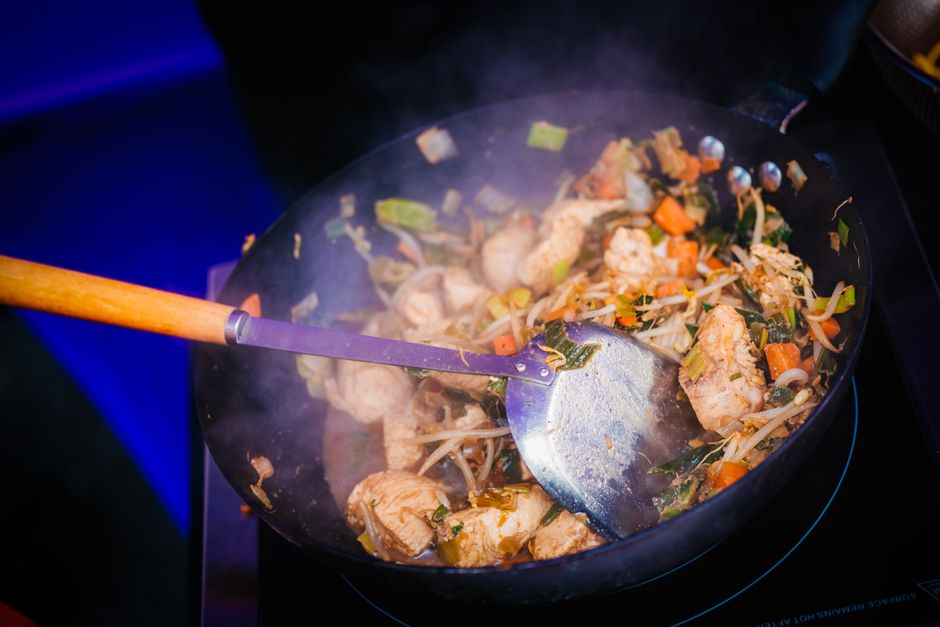
Stir-frying is a quick cooking method that relies on high heat and constant motion. It is best performed in a wok or a large heavy-bottomed skillet, such as cast iron, that can retain heat. The pan should be preheated until it is almost smoking before adding oil. Common high-smoke-point oils include vegetable, canola, or peanut oil. Sesame oil is generally used as a finishing flavor rather than for cooking.
The cooking sequence is crucial to achieve the desired texture. Start by cooking the chicken in a single layer, allowing it to sear without stirring too frequently. This browning develops flavor and a caramelized exterior. Once the chicken is cooked through, it should be removed from the pan and set aside. Then, the vegetables are added. Broccoli, being denser, may require a few minutes of cooking before adding the bell peppers, which soften more quickly. A splash of water or broth can be added to create steam, which helps cook the broccoli without excessive oil.
Timing is essential: vegetables should remain slightly crisp rather than becoming limp. This is often referred to as fork-tender but still vibrant. It is also useful to ensure that all pieces are roughly the same size for consistent cooking. Overcrowding the pan should be avoided, as this lowers the temperature and leads to steaming rather than searing. If needed, cooking in batches is a practical approach.
Combining and Saucing
Once the vegetables are cooked to the desired tenderness, the chicken is returned to the pan. The prepared teriyaki sauce is then poured over the ingredients, and the pan is tossed to coat everything evenly. The sauce will begin to bubble and reduce. At this point, the cornstarch slurry should be stirred into the sauce, allowing it to thicken quickly.
The sauce should cling to the chicken and vegetables rather than pooling excessively. If the sauce becomes too thick, a small amount of water or broth can thin it. Conversely, if it remains too thin, additional slurry can be added. The goal is a glossy, translucent coating that enhances the dish’s overall flavor. Some recipes suggest simmering the sauce to develop depth, but in a quick weeknight stir-fry, the cooking process is brief to maintain texture.
Seasoning adjustments can be made at the end. A taste test is recommended to determine if more soy sauce, sweetness, or acidity is needed. However, it is critical to avoid over-seasoning, as the sauce already contributes significant flavor. Optional additions such as sesame seeds, sliced green onions, or a drizzle of sesame oil can be used for garnish and aroma.
Nutritional and Dietary Considerations
This stir-fry offers a balanced profile of protein, fiber, and various vitamins. Chicken breast is a lean source of protein, while broccoli and bell peppers provide vitamin C, vitamin K, and dietary fiber. The teriyaki sauce, though flavorful, may contribute higher sodium and sugar contents, and moderate portion control is advisable. Chefs Journey acknowledges that nutritional needs vary, and adjustments such as reduced-sodium soy sauce or alternative sweeteners can be implemented.
For individuals following specific dietary patterns, this recipe can be adapted to be gluten-free by using tamari or coconut aminos in place of soy sauce. Sugar substitutes can also be employed, though the texture and caramelization of the sauce may be altered. Those watching their carbohydrate intake may serve the stir-fry over cauliflower rice instead of traditional rice. Because these modifications can affect the final dish’s flavor and consistency, they should be made with careful consideration.
It is important to note that cooking times and ingredient choices can influence the nutritional content. There is no guarantee of uniformity, and individuals should consult appropriate professionals for personalized dietary advice. This information is provided for educational purposes and does not replace medical or nutritional guidance.
Conclusion
Mastering a chicken and vegetable stir-fry with teriyaki sauce involves understanding ingredient preparation, cooking techniques, and sauce construction. The process is straightforward yet allows for creativity and customization. By focusing on high heat, timely additions, and balanced flavors, home cooks can prepare a nourishing meal that suits the pace of a weeknight.
Since results depend on factors such as pan type, heat intensity, and ingredient variations, this recipe should be seen as a flexible template rather than a fixed outcome. Each cooking attempt can refine technique and taste preferences. Chefs Journey encourages exploring variations by altering vegetables, adjusting the ratio of sauce ingredients, or introducing different proteins to keep the dish new.